
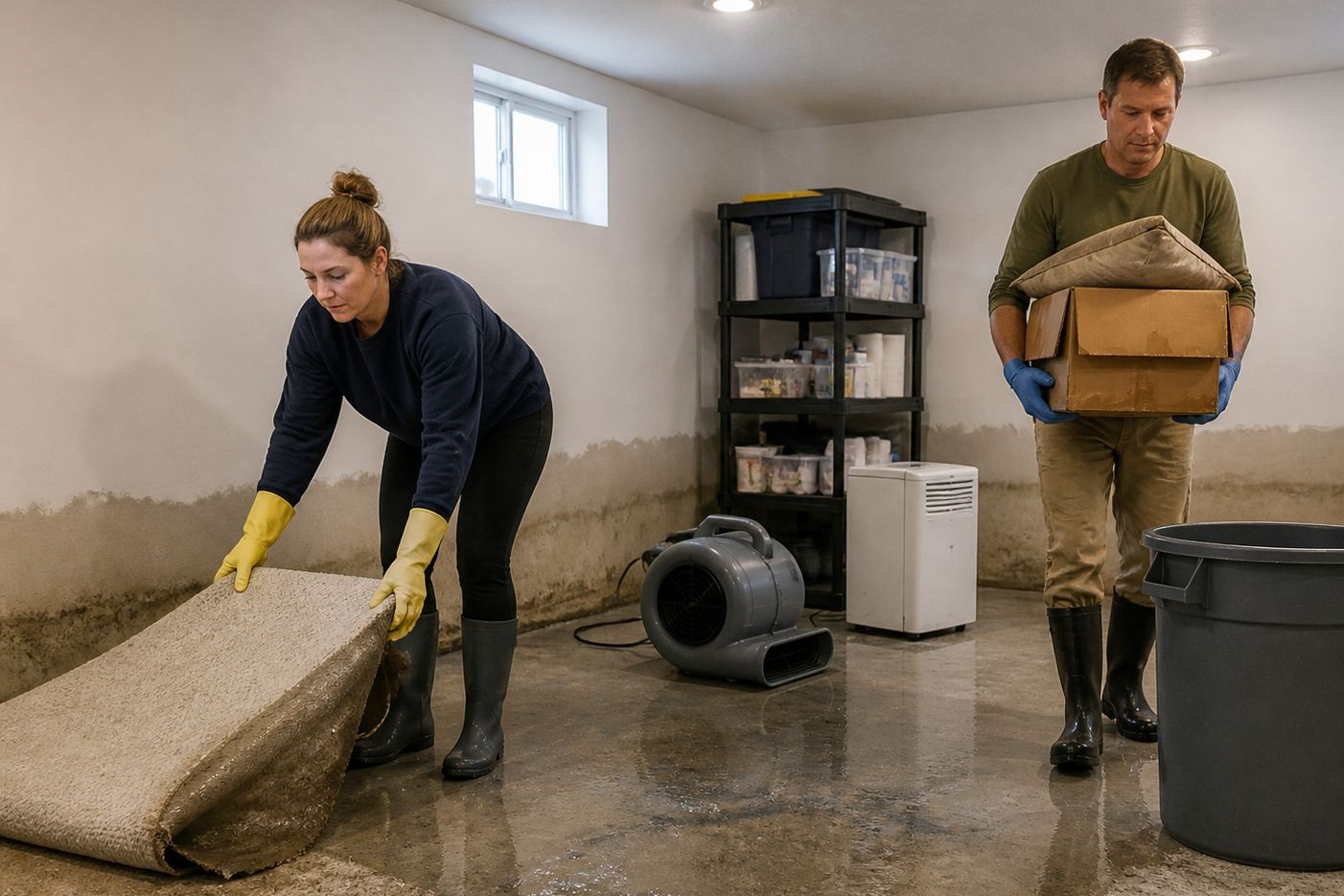
Key takeaways
- You have about 24 to 48 hours. The EPA says that most of the time, you should throw away anything that got wet and can’t be thoroughly cleaned and dried within 24 to 48 hours.
- Soft, absorbent things usually go. Carpet pads, mattresses, soaked drywall, insulation, and cardboard are rarely worth saving after a flood.
- Photograph before you throw anything out. Photos make it much easier to show your insurer what was damaged.
Words you’ll see
- Clean water
- Water from a broken supply line, a water heater, or an appliance hose. It’s the least risky, but it can turn dirty if it sits.
- Gray water
- Water with some contamination, like from a washing machine drain or a dishwasher.
- Black water
- Sewage or outdoor floodwater. It can carry germs and chemicals, so most soaked materials should be thrown away.
- Flood cut
- Cutting away the wet lower part of a wall, usually a foot or more above the highest wet spot, so the wall can dry and wet insulation can be removed.
- Porous
- Soaks up water. Carpet, drywall, mattresses, and cardboard are porous. Glass, metal, and hard plastic are not.
- Dehumidifier
- A machine that pulls moisture out of the air. Fans move air; a dehumidifier takes the water out of it.
On this page
What should I do before I start cleaning?
Make sure the space is safe, figure out what kind of water you’re dealing with, and document everything. Taking an hour to do this first won’t ruin your cleanup. Getting hurt, or losing your insurance proof, can’t be undone.
- 1
Check for electrical hazards
Don’t step into standing water if it could be touching outlets, extension cords, or appliances. If you can reach your electrical panel from a dry spot, turn off power to the flooded area. If you can’t, call an electrician or your power company first.
- 2
Figure out what kind of water it was
A burst supply pipe or a leaking water heater is usually clean water. A backed-up floor drain, an overflowing toilet, or water that came in from outside can carry sewage, dirt, and chemicals. In the Boise area, that often means a burst pipe, a water heater, a backed-up floor drain, or snowmelt or irrigation water seeping in. The EPA warns that floodwater can get mixed with sewage, dirt, or other substances, even when the flooding starts with rain.
- 3
Document it before you touch it
Take wide photos of each room, close-ups of damaged items, and a shot of the highest water line on the walls. Rhode Island’s health department says to photograph all the damaged property you have to throw away for insurance purposes.
- 4
Call your insurer
Report the damage and ask whether they want to see anything before it goes out to the curb. Keep a running list of what you throw away and what you spend.
How fast do I need to dry things out?
As fast as you can, ideally within 24 to 48 hours. The EPA’s flood cleanup fact sheet says that most of the time, you should throw away anything that got wet and can’t be thoroughly cleaned and dried within 24 to 48 hours. Rhode Island’s health department adds that areas that stay wet or damp for more than 48 hours can grow mold.
That doesn’t mean your house will be dry in two days. The EPA says drying usually takes several days to weeks. The goal for the first two days is to get the wettest, most absorbent things out of the house and get fans and a dehumidifier running on what’s left.
What should I throw away, and what can I save?
Throw away things that soak up a lot of water and can’t be fully cleaned and dried. Save hard, non-absorbent things that you can wash and disinfect. The EPA puts it simply: you can usually clean and dry materials that don’t soak up water.
The FDA says medicines that touched floodwater or unsafe water should be thrown away, even if they’re in their original containers with screw tops or snap lids. If you need a replacement for an important prescription, call your pharmacist or doctor. The USDA says not to eat any food that may have touched floodwater. Containers with screw caps, snap lids, and pull tops aren’t waterproof, so food in them should go too.
How do I clean what I’m keeping?
Clean first with detergent and water, then disinfect. Never mix cleaning products. Disinfectants don’t work well on dirty surfaces, so scrub off the mud and grime before you sanitize.
- Wear an N-95 respirator, goggles without vent holes, rubber gloves, long sleeves, long pants, and boots, as the EPA recommends.
- Wash hard surfaces with water and detergent, rinse, and dry them right away.
- To clean mold off hard surfaces with bleach, the CDC’s recipe is 1 cup of household bleach in 1 gallon of water. Open windows and doors first.
- Never mix bleach with ammonia or any other cleaner. The fumes are toxic.
- Keep kids, pets, and anyone with asthma or a weak immune system away while you clean.
How do I know it’s really dry?
Go by moisture readings, not by touch. Drywall, wood framing, and concrete can feel dry on the surface while they’re still wet inside. If you put back flooring, baseboards, or new drywall too soon, you can trap that moisture and end up with mold.
Restoration crews use moisture meters and compare readings on wet areas to a dry, unaffected area of the same material. If you’re doing it yourself, keep fans and a dehumidifier running with windows closed (open them while you’re using bleach or other cleaners), empty the dehumidifier often, and don’t rebuild until a pro or a meter says it’s dry. Our guide on how long wet drywall takes to dry has more detail.
Can I clean it up myself, or should I hire help?
Small, clean-water messes are often a do-it-yourself job. Sewage, large areas, and existing mold are not. The EPA’s mold guide says that for mold covering more than about 10 square feet, you should consult its professional cleanup guidance, and that damage from sewage or other contaminated water calls for a professional with experience in that kind of cleanup.
If you hire someone, get a written estimate, ask what’s included, and don’t sign anything that hands over your insurance payment (sometimes called an assignment of benefits) until you understand it. Our guide on how to choose a water damage company in Boise lists questions to ask.
Will insurance pay for flood cleanup?
It depends on where the water came from. According to the NAIC, homeowners policies generally cover sudden, accidental water damage from inside the house, like a burst pipe. But FEMA’s FloodSmart site notes that most homeowners insurance doesn’t cover flood damage. Water that rose from outside usually needs a separate flood policy.
Read our guides on sewer backup coverage and filing a water damage claim in Idaho. Keep every receipt, including fans, dehumidifiers, and trash bags, because your insurer may reimburse reasonable costs to keep the damage from getting worse. Ask what your policy covers.
Frequently asked questions
Can wet carpet be saved after a flood?
Sometimes, if the water was clean and the carpet was dried quickly. The pad underneath almost always needs to go. If the water was sewage or came from outside, the carpet should usually be thrown away.
How long does it take mold to grow after a flood?
Mold can start growing on things that stay wet, which is why the EPA says to dry water-damaged areas within 24 to 48 hours. That’s why the first two days of drying matter so much.
Do I have to throw away drywall after a flood?
Drywall that soaked up a lot of water usually needs to be cut out and replaced, especially after sewage or outdoor floodwater. Drywall that only got damp and stayed firm may be dried in place, but have it checked with a moisture meter.
Should I use bleach on everything?
No. Clean with detergent and water first. Use bleach only on hard surfaces, with windows open, and never mix it with ammonia or other cleaners. Bleach won’t save things like soaked drywall or carpet pad.
Can I throw things away before the insurance adjuster comes?
Often you can, especially wet items that could grow mold, but photograph everything and keep a list first. Call your insurer and ask what they need before you toss anything.
Flood cleanup is hard, messy work, and it’s okay to feel overwhelmed. Take it one step at a time: safety, photos, then drying.
Call if the water was sewage or floodwater, or if it got into walls or under floors, and we’ll try to connect you with an independent water damage provider near you.
Read next


Related guides
Sources (checked November 14, 2026)
- US EPA, “Flood Cleanup: Protecting Indoor Air Quality” (fact sheet): https://www.epa.gov/sites/default/files/2015-09/documents/floods.pdf
- US EPA, “Flood Cleanup to Protect Indoor Air and Your Health”: https://epa.gov/emergencies-iaq/flood-cleanup-protect-indoor-air-and-your-health
- US EPA, “A Brief Guide to Mold, Moisture, and Your Home”: https://www.epa.gov/mold/brief-guide-mold-moisture-and-your-home
- CDC, “Guidelines for Cleaning Safely After a Disaster”: https://www.cdc.gov/natural-disasters/safety/index.html
- Rhode Island Department of Health, “Flooding: About Cleaning Up”: https://health.ri.gov/emergency/flooding/about/cleaning
- FDA, “Safe Drug Use After a Natural Disaster”: https://www.fda.gov/drugs/emergency-preparedness-drugs/safe-drug-use-after-natural-disaster
- USDA FSIS, “Keep Your Food Safe During Emergencies”: https://www.fsis.usda.gov/food-safety/safe-food-handling-and-preparation/emergencies/keep-your-food-safe-during-emergencies
- FEMA, FloodSmart: https://www.floodsmart.gov/
- NAIC, “Will My Homeowners Insurance Policy Cover Water Damage From a Burst Pipe?”: https://content.naic.org/article/will-my-homeowners-insurance-policy-cover-water-damage-burst-pipe
Update log
- November 14, 2026: First published.