
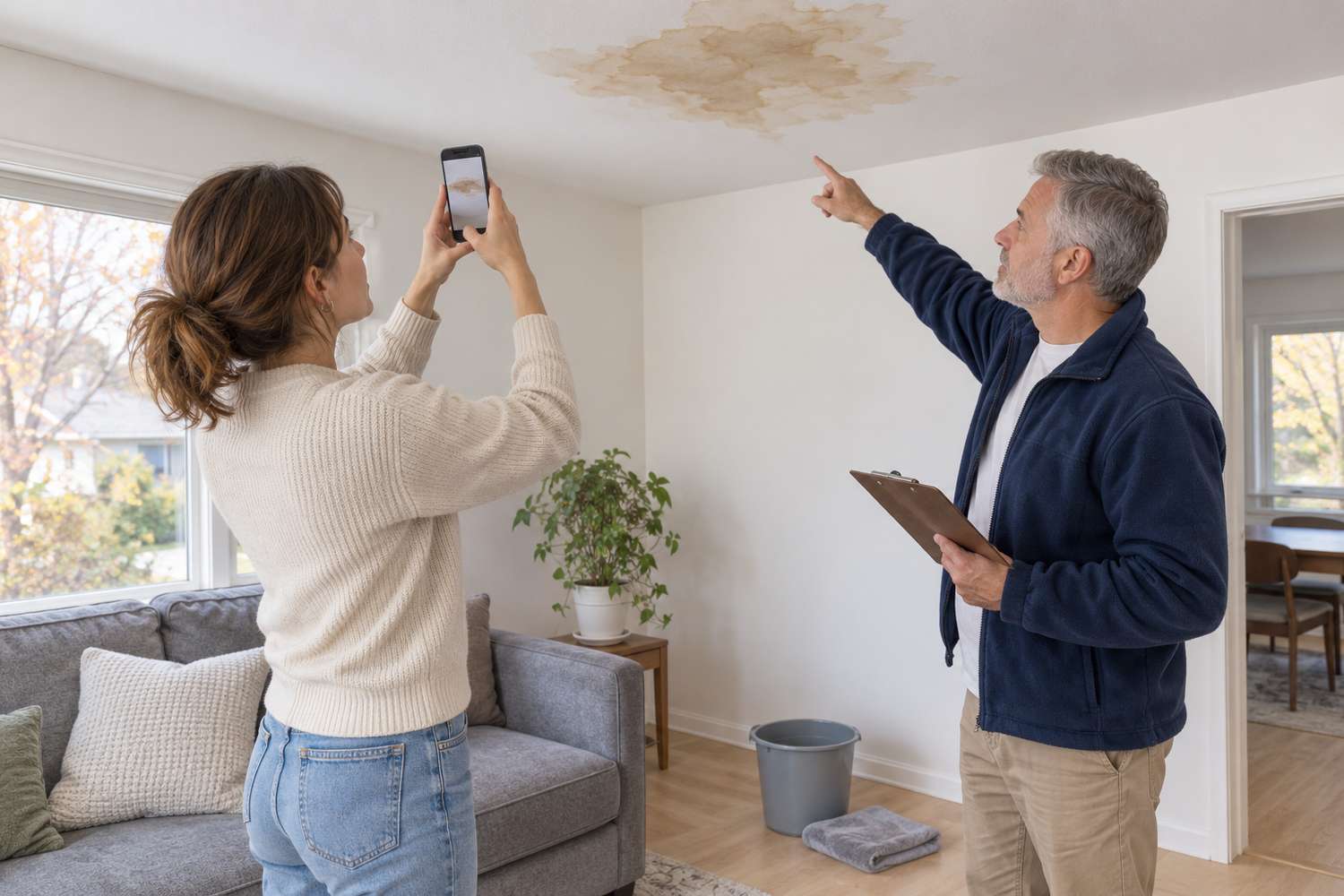
Key takeaways
- The building is usually the landlord’s job. Idaho law expects landlords to keep the roof, walls, and plumbing in working order and to fix serious leaks.
- Your belongings are usually yours to cover. The landlord’s insurance protects the building, not your furniture or laptop. That’s what renters insurance is for.
- Put repair requests in writing. A written notice gives your landlord three days to fix the problem, and it’s generally required before you can take the landlord to court.
- Don’t withhold rent. Idaho generally doesn’t allow it, and it can put you at risk of eviction.
Words you’ll see
- Renters insurance
- A policy you buy to protect your own belongings and to cover you if you accidentally damage someone else’s property. It doesn’t cover the building.
- Loss of use
- The part of a renters policy that helps pay extra living costs, like a hotel, if a covered loss makes your place unlivable. Some policies call it “additional living expenses.”
- Deductible
- The amount you pay before insurance pays the rest. Renters deductibles commonly run $250 to $1,000.
- Subrogation
- When your insurance company pays your claim and then tries to collect from whoever caused the damage, like an upstairs neighbor.
- Actual cash value
- What a damaged item is worth today, after wear and age. Replacement cost, by contrast, pays closer to the price of a new one.
- Three-day notice
- A written list of problems you give your landlord. Under Idaho Code § 6-320, it starts a three-day window for repairs before you can sue.
On this page
Who usually pays for what
Every leak is different, and your lease can change the answer. But in most Idaho rentals, the costs tend to fall like this:
Fault matters more than where the water came from. A pipe that wore out is usually the landlord’s responsibility. A bathtub someone forgot to turn off is usually on whoever left it running.
What Idaho law expects from your landlord
Idaho doesn’t have a detailed statewide housing code, but Idaho Code § 6-320 lets a tenant take a landlord to court for failing to:
- Provide reasonable waterproofing and weather protection
- Keep electrical, plumbing, heating, ventilating, cooling, and sanitary facilities in good working order
- Keep the home from being hazardous to the tenant’s health or safety
The Idaho Attorney General’s Landlord and Tenant Manual (July 2026 edition) lists “serious leaks,” a leaking roof or walls, and a lack of hot or cold water among the conditions that may violate these standards.
If you live in Boise, the city’s housing code applies too. The City of Boise’s notice of renter rights says landlords must meet minimum health and safety standards and have three business days to fix a violation. You can report a problem to Boise Code Compliance at 208-972-8150 (option 4) or by email at cccr@cityofboise.org.
How to ask for repairs the right way
A text or phone call is fine to get help fast. But if the leak isn’t fixed, the written notice is what protects you. Here’s how it works under Idaho law and the state’s court self-help guide:
- 1
Write down each problem
Be specific: “Water is leaking from the bathroom ceiling and the drywall is sagging.” List every problem and ask the landlord to repair each one. Date it, sign it, and keep a copy.
- 2
Deliver it so you can prove it
Hand it to your landlord or their agent with a witness present, or send it by certified mail with a return receipt. The Attorney General’s manual says you can also leave it with an employee at the landlord’s usual place of business.
- 3
Give the landlord three days
The landlord has three days after getting your notice to make the repairs. Per the court self-help guide, weekends and holidays don’t count toward the three days. If you agree to more time, put that agreement in writing.
- 4
If nothing happens, you can go to court
You can ask a judge to order the repairs, and the Attorney General’s manual says the trial is held within 12 days of filing unless you ask for a later date. If you only want money and the amount is $5,000 or less, you can use small claims court. Damages can include what the repairs cost, the drop in the rental value of your home while the problem lasted, and other losses it caused, like ruined furniture.
Boise also has a city rule that prohibits landlords from retaliating against tenants who ask for repairs or report safety problems.
Your belongings: where renters insurance comes in
Many renters assume the landlord’s insurance will replace their things. It usually won’t. The landlord’s policy protects the building. As the Attorney General’s manual puts it, renters insurance is what covers a tenant’s personal belongings.
Even with a policy, these are the surprises renters run into most:
- The deductible. If the damage is less than your deductible, the claim may not pay anything. If someone else was at fault, your insurer may try to get that deductible back for you.
- Sudden vs. slow leaks. Policies usually cover sudden water damage, like a pipe that bursts. A slow leak you knew about but never reported can be denied. Report leaks right away and save the message.
- Floods and sewer backups. Water from outside flooding or a backed-up drain is often excluded unless you added extra coverage.
- What an item is worth. Some policies pay what your old couch was worth, not what a new one costs. Check whether yours pays actual cash value or replacement cost.
- A lapsed policy. Some renters find out after a leak that their policy didn’t renew. It’s worth taking a minute to check yours.
No renters insurance? You may still recover your losses if you can show someone was careless, like a landlord who ignored a leak you reported, or a neighbor who left a tub running. That usually means a demand letter or small claims court, so your photos and written messages matter even more.
If you can’t stay there during repairs
Some leaks leave a unit without water, power, or a usable bathroom, or the walls have to be opened up to dry. If that happens:
- Ask your renters insurance about loss of use coverage. It generally pays the extra cost of living somewhere else, not your normal expenses. Save every receipt.
- Ask your landlord, in writing, to confirm that the unit can’t be lived in during repairs. Insurers often ask for this.
- Read your lease for anything about rent during repairs or temporary housing.
- Don’t just stop paying rent or move out. Get advice first from Idaho Legal Aid Services or a local attorney.
When the water came from another unit
In apartments, the leak often starts next door or upstairs. Tell your landlord or property manager right away. They’re the ones who can get into the other unit to stop the water. If you know whose unit it is, let that neighbor know too, calmly and in writing.
If you have renters insurance, you don’t have to wait for the neighbor to admit fault. File your claim. Your insurer pays what your policy covers and can then try to collect from the neighbor’s insurance. That process is called subrogation.
Your security deposit after a leak
The Attorney General’s manual says a lease can’t make your deposit cover damage that wasn’t caused by you or your guests. When you move out, the landlord has 21 days to return your deposit with a written list of any deductions, or up to 30 days if you both agreed to that in the lease.
- Keep your leak photos, your written notices, and the landlord’s replies until your deposit is back.
- Take dated photos of the repaired areas when you move out.
- If you think money was kept unfairly, the manual explains how to send a written demand. It also says a judge may award three times a wrongfully withheld deposit, plus court costs and attorney fees.
If you’re the landlord
A fast, clear response protects your property and your relationship with your tenant. Stop the water, get the drying started, and document everything for your own insurance claim. Let your tenant know your policy covers the building, not their belongings, and suggest they contact their renters insurer.
If a tenant’s carelessness caused the damage, the Attorney General’s manual explains that you can give the tenant written notice and three days to fix the problem, and the tenant may have to pay for repairs. Keep receipts and photos, since a lease can’t make the deposit cover damage the tenant or their guests didn’t cause.
Where to get help in the Boise area
Frequently asked questions
Does my landlord’s insurance cover my belongings?
Usually not. A landlord’s policy covers the building and anything the landlord owns, like the carpet or appliances. Your furniture, clothes, and electronics are covered by your own renters insurance. Without it, you’d need to show someone else was at fault to recover your losses.
Can my landlord charge me for a leak?
Generally, only if you or your guests caused the damage, for example by letting a tub overflow. A lease can’t make your deposit cover damage you didn’t cause. Ordinary wear and tear also can’t be taken out of your deposit.
Do I still have to pay rent while the leak is being fixed?
In Idaho, generally yes. State law doesn’t give tenants a right to withhold rent over repairs. If you can’t live there, talk to your landlord in writing, check your lease, and ask your renters insurance about loss of use coverage.
What should I do if mold shows up after the leak?
Tell your landlord right away, in writing. The Attorney General’s manual notes that Idaho has no state agency that regulates mold in rentals, so your written notice and photos are your main tools. If it isn’t handled and it’s affecting your health or safety, a three-day notice may be your next step.
Can I break my lease because of water damage?
It depends on your lease and how serious the problem is. Moving out or stopping rent without advice can backfire. Talk to Idaho Legal Aid Services or an attorney before you decide.
A leak in a place you rent can feel out of your hands. Writing things down and knowing who handles what puts some of that control back.
If you own or manage the rental and need help drying it out, you can call us. We’ll try to connect you with an independent water damage provider.
Read next

Related guides
Sources (checked November 13, 2026)
- Idaho Office of the Attorney General, “Landlord and Tenant Manual” (July 2026): https://www.ag.idaho.gov/content/uploads/2026/07/LandlordTenant.pdf
- Idaho Office of the Attorney General, “Manuals”: https://www.ag.idaho.gov/office-resources/manuals/
- Idaho Code § 6-320, “Action for damages and specific performance by tenant”: https://legislature.idaho.gov/statutesrules/idstat/Title6/T6CH3/SECT6-320/
- Idaho Court Assistance Office, “Getting Repairs Made” (Form H-2): https://courtselfhelp.idaho.gov/docs/forms/H-2.pdf
- City of Boise, “Notice of Rights and Responsibilities”: https://www.cityofboise.org/media/18171/notice-of-rights-and-responsibilies_english.pdf
- City of Boise, “Code Compliance”: https://www.cityofboise.org/departments/finance-and-administration/code-compliance/
- Idaho Department of Insurance, “Home & Renters Claims”: https://doi.idaho.gov/consumers/home-renters-insurance/home-renters-claims/
- Idaho Legal Aid Services, “Healthy Housing”: https://www.idaholegalaid.org/files/HEALTHY-HOUSING.pdf
Update log
- November 13, 2026: First published.