
Key takeaways
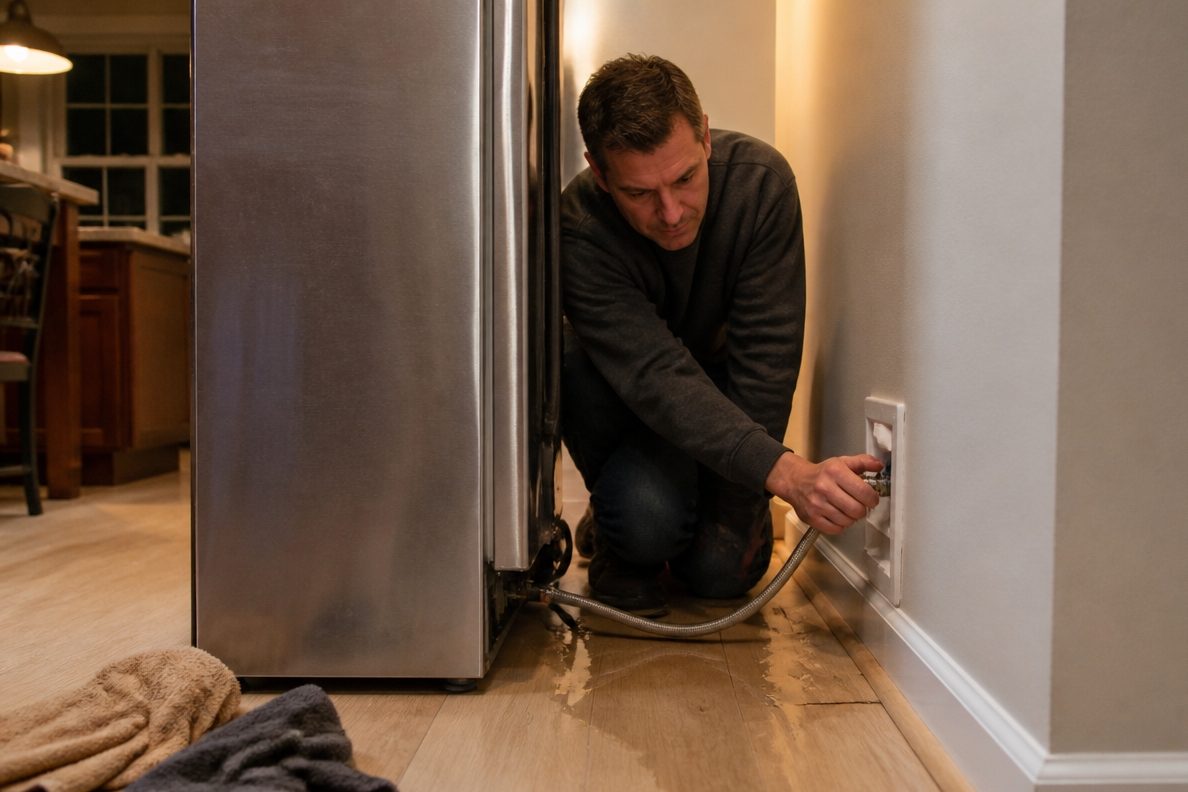
- The leak is often in the water line, not the fridge. Common culprits are the supply line, the shutoff valve, and the fittings that connect them, but a clogged defrost drain inside the fridge can leak too.
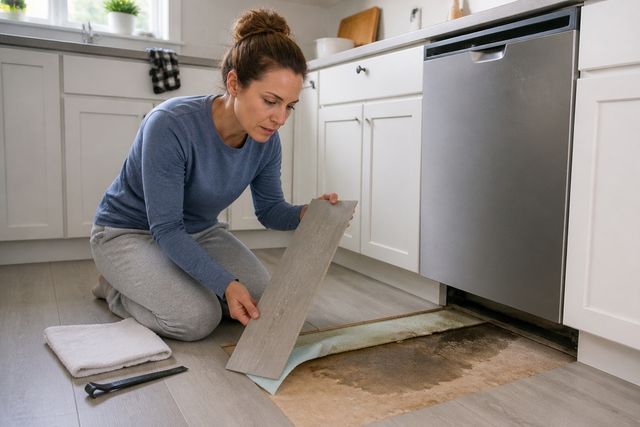
- Slow leaks hide under the floor. Water can run under flooring and cabinets for weeks before you see it, so the damage is often bigger than the puddle.
- Insurance cares about sudden vs. slow. The insurance regulator in neighboring Washington State lists an ice maker line that snaps and sprays water as an example of sudden damage. It also notes that most policies don’t cover gradual leaks.
Words you’ll see
- Supply line
- The thin tube that carries water from the wall or floor to the back of the fridge. It may be plastic, copper, or braided stainless steel.
- Ice maker box
- A recessed plastic box in the wall behind the fridge that holds the shutoff valve. Common in newer homes.
- Saddle valve
- An older type of valve that clamps onto a water pipe and pierces it. Many plumbers replace them because they’re prone to leaks.
- Compression fitting
- The small threaded nut that connects the supply line to the valve and the fridge. It can loosen when the fridge is moved.
- Drain pan
- A shallow tray under many fridges that catches defrost water. It’s different from the water line.
- Subfloor
- The plywood, OSB, or concrete layer under your flooring. Water from a slow leak often ends up here.
On this page
How do I shut off the water to my refrigerator?
Find the small valve that feeds the fridge and turn it off. If you can’t find it in a minute or two, close your home’s main shutoff valve.
To reach a valve behind the fridge, raise the front leveling legs so it rolls on its wheels, then pull it straight out slowly, a little at a time. A second person helps. Don’t yank it, because that can kink or pull off the line. If the floor in front is wet or soft, lay down a piece of plywood or hardboard first so you don’t scratch or tear the flooring.
Where is the water coming from?
Many fridge leaks come from the water line or its fittings, but others start inside the fridge, such as a clogged defrost drain. Where the water shows up is your best clue.
If the leak is in the line or valve, a plumber can usually replace them. If it’s inside the fridge, call an appliance repair tech. Either way, the water damage under the floor is a separate problem.
Should I replace the water line?
If it leaked, yes. And if it’s old, cracked, or brittle plastic, it’s worth replacing even if it didn’t. Certified Appliance Accessories, which makes ice maker connectors, says any hose carrying water should be replaced every 5 years.
- Ask about a braided stainless steel line instead of thin plastic tubing.
- If you have a saddle valve clamped onto a pipe, ask a plumber about replacing it with a standard shutoff valve.
- Leave a little slack in the line so the fridge can move without pulling on the fittings.
- After any move or repair, check behind the fridge for drips over the next day.
- A water leak alarm on the floor behind the fridge is an inexpensive way to catch the next leak early.
Does insurance cover a refrigerator water line leak?
Often, if the leak was sudden. Often not, if it went on slowly for a long time. The insurance regulator in neighboring Washington State, the Office of the Insurance Commissioner, which publishes a plain-English guide on this, lists an ice maker line that snaps and sprays water across the kitchen floor as an example of sudden damage, and notes that most policies don’t cover gradual leaks. According to the NAIC, homeowners policies generally cover damage from a “sudden and accidental” discharge from a plumbing system. Policies vary, so check yours or ask your agent.
Report the damage as soon as you find it. Take photos before anything is removed, keep the old line or valve if it’s replaced, and save every receipt. Ask your insurer whether your policy also pays to replace the line or only the water damage it caused.
If your claim was turned down because the leak was called “gradual,” see what to do after a denial in Idaho. Our guide to water damage claims in Idaho covers the steps.
Who should I call about a refrigerator leak?
A plumber for the line or valve, an appliance tech for leaks inside the fridge, and a water damage restoration company if water got under the floor or into the ceiling below.
Frequently asked questions
Can I keep using my refrigerator after a water line leak?
Usually, yes. The fridge can keep running with the water line shut off. Turn off the ice maker so it doesn’t keep trying to fill. You won’t have ice or water from the door until the line is fixed.
How much water can a refrigerator line leak?
A slow drip may only leak a little each day, but over weeks it can soak a large area of floor. A line that breaks suddenly can flood a kitchen in a short time because it’s under full water pressure.
Why is there water under my fridge but the line looks fine?
It may be coming from inside the fridge, like a clogged defrost drain, a cracked drain pan, the water filter housing, or the ice maker. An appliance tech can track it down.
Can I replace the water line myself?
Many homeowners do, but the fittings need to be snug but not over-tightened, and the line can’t be kinked. If you’re not comfortable with it, or you have a saddle valve, call a plumber. Either way, check for drips afterward.
How do I prevent another refrigerator leak?
Use a braided stainless steel line, leave some slack, check behind the fridge once in a while, and consider a water leak alarm on the floor. Replacing old plastic tubing and saddle valves helps too.
A small line behind the fridge can do a surprising amount of damage. Shutting it off and checking the floor now can save you a much bigger repair.
Call if water got under the floor, into the cabinets, or into the ceiling below, and we’ll try to connect you with an independent water damage provider near you.
Read next
Related guides
Sources (checked November 14, 2026)
- Washington State Office of the Insurance Commissioner, “Leaks, water damage, and mold”: https://www.insurance.wa.gov/insurance-resources/home-insurance/how-home-insurance-works/leaks-water-damage-and-mold
- NAIC, “Will My Homeowners Insurance Policy Cover Water Damage From a Burst Pipe?”: https://content.naic.org/article/will-my-homeowners-insurance-policy-cover-water-damage-burst-pipe
- US EPA, “Mold Remediation in Schools and Commercial Buildings Guide: Chapter 4” (Table 1): https://www.epa.gov/mold/mold-remediation-schools-and-commercial-buildings-guide-chapter-4
- Certified Appliance Accessories, “Ice Maker Connections”: https://www.certifiedaccessories.com/collections/ice-maker-connections
Update log
- November 14, 2026: First published.