
Key takeaways
- The stain is a symptom, not the problem. Brown shows up because water picks up color from the wood, insulation, and drywall paper it passes through. The real question is whether water is still getting in.
- Location is your best clue. A stain under a bathroom usually points to plumbing. A stain on the top floor that grows after rain or snow usually points to the roof.
- Insurance cares about timing. According to the NAIC and state regulators, policies generally cover sudden, accidental water damage, but usually not slow leaks that went on for a long time. Report new damage promptly.
Words you’ll see
- Active leak
- Water that is still getting in, whether it happens every day or only when it rains or someone showers upstairs.
- Flashing
- Thin metal strips that seal the joints on a roof, like around a chimney, vent pipe, or skylight. Worn or loose flashing is a common source of roof leaks.
- Ice dam
- A ridge of ice at the edge of the roof that traps melting snow. The trapped water can back up under shingles and leak into the ceiling.
- Stain-blocking primer
- A primer made to seal in water stains so they don’t bleed through new paint. Regular ceiling paint usually won’t cover a water stain on its own.
- Moisture meter
- A handheld tool that measures how wet drywall, wood, and other materials are. Pros compare the stain to a dry area of the same ceiling.
- Condensation
- Water that forms when warm, damp air hits a cold surface. In a cold attic, it can drip onto the top of the ceiling even when nothing is leaking.
On this page
What does a brown water stain on the ceiling mean?
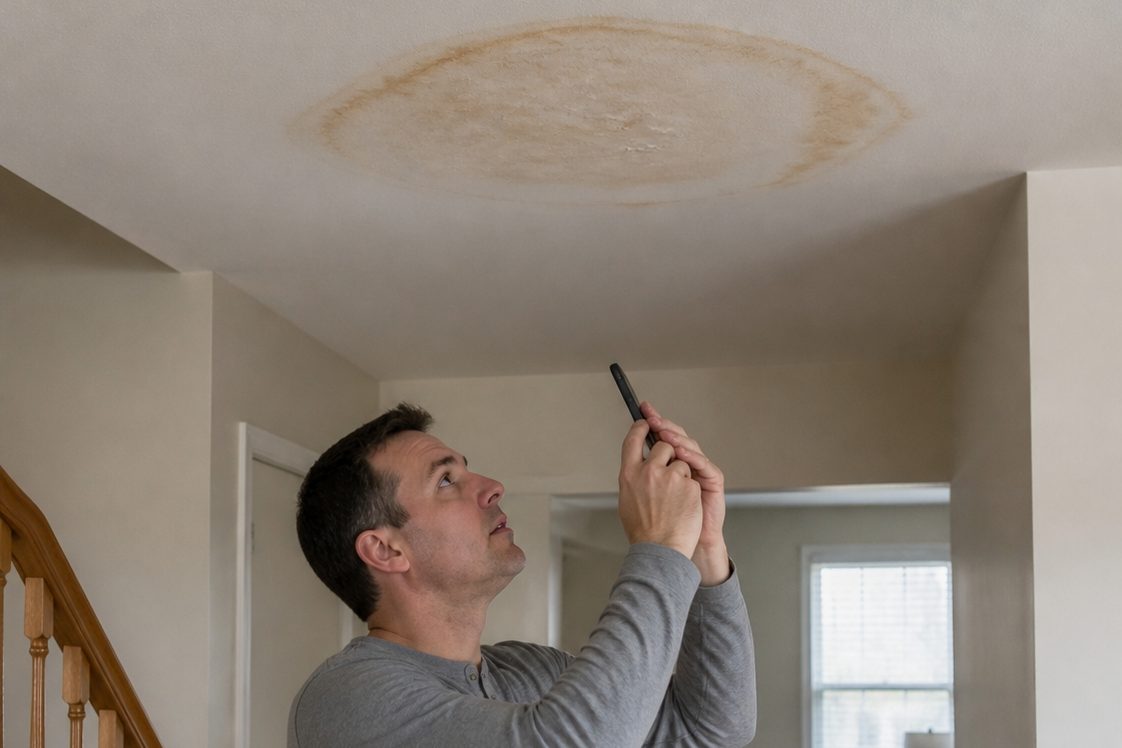
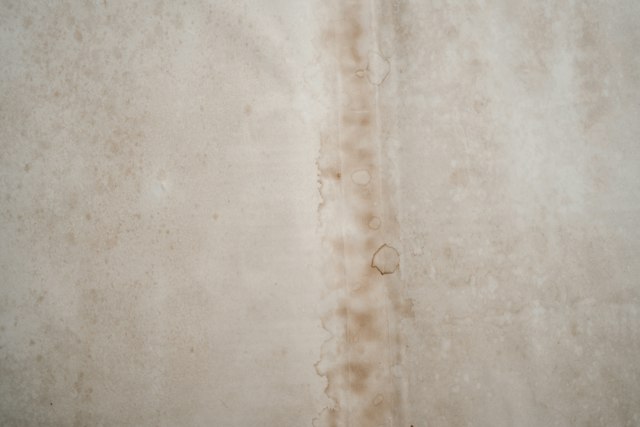
It means water soaked into the ceiling from above and then dried, leaving a mark behind. The stain turns brown or yellow because the water carries color from the wood, insulation, dust, and drywall paper it passes through. Once that water dries, the color stays.
What the stain can’t tell you is when it happened or whether it’s still happening. A ring from a leak that was fixed years ago can look a lot like one from a slow drip that’s still going. That’s why the next step is figuring out whether it’s active.
Is it an active leak or an old one?
Check the stain over a few days, and especially after rain, snowmelt, or heavy water use upstairs. If it grows, darkens, or feels damp, treat it as active. If it stays the same and the ceiling is firm, it may be old, but it’s still worth confirming.
A moisture meter is the quickest way to check whether it’s wet right now. Pros compare a reading on the stain to one on a dry part of the same ceiling. Our guide on how to tell if water damage is old or new covers more clues, like rings, odor, and mold.
Where is the water coming from?
Start with whatever sits directly above the stain, but remember that water can travel. It can run along a pipe or a ceiling joist before it soaks through, so the stain may be a few feet from the actual leak.
In the Boise area, winter brings its own culprits. Ice dams and snowmelt can push water into the edges of the roof, and pipes in cold attics and outside walls can freeze and split. If your stain showed up after a cold snap, read our guides on ice dam leaks and frozen and burst pipes.
Can I just paint over a water stain?
Only after the leak is fixed and the ceiling is completely dry. Paint can hide the stain for a while, but it won’t stop the water. If the leak is still going, the stain usually comes back, and in the meantime moisture can build up where you can’t see it.
Once the source is fixed and the area tests dry, most stains need a stain-blocking primer before the ceiling paint goes on. Regular paint alone often lets the brown bleed back through. If the drywall is soft, crumbling, or sagging, it should be cut out and replaced instead of painted.
Will insurance cover a ceiling water stain?
It depends on what caused it and how long it’s been going on. The NAIC explains that homeowners policies generally cover damage from water that’s released suddenly and accidentally, like a pipe that bursts. Washington State’s insurance commissioner, which publishes a plain-English guide on this, notes that most policies don’t cover damage from slow leaks that go on for a long time. Your own policy’s wording is what counts.
That’s why a stain you’ve been watching for months can be harder to claim than one that showed up last night. If it’s new, report it promptly, take photos before any repairs, and keep receipts. Ask your insurer whether your policy also pays to fix the roof or pipe that leaked, or only the water damage it caused.
Our step-by-step guide to water damage claims in Idaho walks you through the process. If your claim was turned down because the leak was called “gradual,” see what to do after a denial.
Found a stain when buying or selling a home in Idaho?
Ask about it in writing and have it checked before closing. A stain often shows up on an inspection report, and it’s easy to brush off. But it’s one of the few visible clues to a leak that may be hidden in the attic, the roof, or the plumbing.
Idaho requires most home sellers to fill out a property condition disclosure form. The form in Idaho Code § 55-2508 asks about problems with things like the roof, plumbing, drainage, and basement water, plus any other problems the seller knows about. The disclosure forms real estate agents use may ask more directly about leaks and moisture, so read the questions carefully.
- If you’re buying, ask the seller in writing when the stain appeared, what caused it, and what was fixed. Ask for receipts.
- Ask your inspector to check the stain with a moisture meter, and to look in the attic or at the plumbing above it.
- Look at the roof and the bathroom above the stain, not just the stain itself.
- If you’re selling and you know about a past leak, talk to your agent about how to disclose it. A fresh coat of paint doesn’t change what you know.
This is general information, not legal advice. If a stain turns into a dispute, talk to your real estate agent or an Idaho real estate attorney.
Who should I call about a ceiling water stain?
It depends on where the water is coming from: a roofer for roof leaks, a plumber for pipes and drains, and a water damage restoration company if the ceiling or insulation is wet.
The roofer or plumber stops the water. A restoration crew finds the hidden moisture and dries out the ceiling. A drywall or painting contractor puts it back together once everything is truly dry. If you rent, our guide on who pays when a rental leaks explains who usually handles what.
Frequently asked questions
Is a brown water stain on the ceiling an emergency?
Not always. If it’s dripping, sagging, soft, or near a light fixture, treat it as urgent and keep people out from under it. If it’s dry and firm, it’s not an emergency, but you should still find the source soon, before a small leak causes bigger damage.
Why did a water stain appear when it hasn’t rained?
The most common cause is plumbing above the ceiling, like a shower drain, toilet seal, or supply line. Other causes include an AC or furnace condensate line, a water heater in the attic, or condensation from warm, damp air in a cold attic.
Does a ceiling water stain mean there’s mold?
Not necessarily, but it can. Mold usually needs moisture that sticks around. A musty smell, fuzzy spots, or a stain that stays damp are signs to have it checked. The EPA says homeowners can usually handle mold covering less than about 10 square feet. For larger areas, it points people to its professional cleanup guidance.
How much does it cost to fix a ceiling water stain?
It can range from a can of stain-blocking primer to a much bigger bill, depending on the source. If the leak is already fixed and the ceiling is dry, it may only need primer and paint. The real cost is usually in finding and fixing the source, whether that’s the roof, the plumbing, or an appliance, and replacing any drywall or insulation that got soaked. Get a written estimate before work starts.
Should I cut a hole in the ceiling to find the leak?
Not as a first step. A moisture meter or thermal camera can often narrow down the source without cutting. If the ceiling needs to be opened, have a pro do it, and have an older textured ceiling tested first.
A brown stain is your house telling you water got somewhere it shouldn’t. A few quick checks now can save you from a much bigger repair later.
Call if the stain is growing, damp, or sagging, or if water got into the insulation above it, and we’ll try to connect you with an independent water damage provider near you.
Read next

Related guides
Sources (checked November 14, 2026)
- U.S. Consumer Product Safety Commission, “Asbestos in the Home”: https://www.cpsc.gov/safety-education/safety-guides/home/asbestos-home
- NAIC, “Will My Homeowners Insurance Policy Cover Water Damage From a Burst Pipe?”: https://content.naic.org/article/will-my-homeowners-insurance-policy-cover-water-damage-burst-pipe
- Washington State Office of the Insurance Commissioner, “Leaks, water damage, and mold”: https://www.insurance.wa.gov/insurance-resources/home-insurance/how-home-insurance-works/leaks-water-damage-and-mold
- Idaho Legislature, Idaho Code § 55-2508, “Disclosure form”: https://legislature.idaho.gov/statutesrules/idstat/Title55/T55CH25/SECT55-2508/
- US EPA, “A Brief Guide to Mold, Moisture, and Your Home”: https://www.epa.gov/mold/brief-guide-mold-moisture-and-your-home
Update log
- November 14, 2026: First published.